h/t blacklistednews
Naomi Prins
In the wake of chopping its Central Bank swap rates today, the Fed has been called a bunch of names: a hero for slugging the big bailout bat in the ninth inning, and a villain for printing money to help Europe at the expense of the US. Neither depiction is right.
The Fed is merely continuing its unfettered brand of bailout-economics, promoted with heightened intensity recently by President Obama and Treasury Secretary, Tim Geithner in the wake of Germany not playing bailout-ball. Recall, a couple years ago, it was a uniquely American brand of BIG bailouts that the Fed adopted in creating $7.7 trillion of bank subsidies that ran the gamut from back-door AIG bailouts (some of which went to US / some to European banks that deal with those same US banks), to the purchasing of mortgage-backed–securities, to near zero-rate loans (for banks).
Similarly, today’s move was also about protecting US banks from losses – self inflicted by dangerous derivatives-chain trades, again with each other, and with European banks.
Before getting into the timing of the Fed’s god-father actions, let’s discuss its two kinds of swaps (jargon alert - a swap is a trade between two parties for some time period – you swap me a sweater for a hat because I’m cold, when I’m warmer, we’ll swap back). The Fed had both of these kinds of swaps set up and ready-to-go in the form of : dollar liquidity swap lines and foreign currency liquidity swap lines. Both are administered through Wall Street's staunchest ally, and Tim Geithner's old stomping ground, the New York Fed.
The dollar swap lines give foreign central banks the ability to borrow dollars against their currency, use them for whatever they want - like to shore up bets made by European banks that went wrong, and at a later date, return them. A ‘temporary dollar liquidity swap arrangement” with 14 foreign central banks was available between December 12, 2007 (several months before Bear Stearn’s collapse and 9 months before the Lehman Brothers’ bankruptcy that scared Goldman Sachs and Morgan Stanley into getting the Fed’s instant permission to become bank holding companies, and thus gain access to any Feds subsidies.)
Those dollar-swap lines ended on February 1, 2010. BUT – three months later, they were back on, but this time the FOMC re-authorized dollar liquidity swap lines with only 5 central banks through January 2011. BUT – on December 21, 2010 – the FOMC extended the lines through August 1, 2011. THEN– on June 29th, 2011, these lines were extended through August 1, 2012. AND NOW – though already available, they were announced with save-the-day fanfare as if they were just considered.
Then, there are the sneakily-dubbed “foreign currency liquidity swap” lines, which, as per the Fed's own words, provide "foreign currency-denominated liquidity to US banks.” (Italics mine.) In other words, let US banks play with foreign bonds.
These were originally used with 4 foreign banks on April, 2009 and expired on February 1, 2010. Until they were resurrected today, November 30, 2011, with foreign currency swap arrangements between the Fed, Bank of Canada, Bank of England, Bank of Japan. Swiss National Bank and the European Central Bank.
They are to remain in place until February 1, 2013, longer than the original time period for which they were available during phase one of the global bank-led meltdown, the US phase. (For those following my work, we are in phase two of four, the European phase.)
That’s a lot of jargon, but keep these two things in mind: 1) these lines, by the Fed’s own words, are to provide help to US banks. and 2) they are open ended.
There are other reasons that have been thrown up as to why the Fed acted now – like, a European bank was about to fail. But, that rumor was around in the summer and nothing happened. Also, dozens of European banks have been downgraded, and several failed stress tests. Nothing. The Fed didn’t step in when it was just Greece –or Ireland - or when there were rampant ‘contagion’ fears, and Italian bonds started trading above 7%, rising unabated despite the trick of former Goldman Sachs International advisor Mario Monti replacing former Prime Minister, Silvio Berlusconi’s with his promises of fiscally conservative actions (read: austerity measures) to come.
Read On...
Showing posts with label Goldman Sachs. Show all posts
Showing posts with label Goldman Sachs. Show all posts
Monday, February 13, 2012
Sunday, November 13, 2011
Finally, a Judge Stands up to Wall Street

Federal judge Jed Rakoff, a former prosecutor with the U.S. Attorney’s office here in New York, is fast becoming a sort of legal hero of our time. He showed that again yesterday when he shat all over the SEC’s latest dirty settlement with serial fraud offender Citigroup, refusing to let the captured regulatory agency sweep yet another case of high-level criminal malfeasance under the rug.
The SEC had brought an action against Citigroup for misleading investors about the way a certain package of mortgage-backed assets had been chosen. The case is very similar to the notorious Abacus case involving Goldman Sachs, in which Goldman allowed short-selling billionaire John Paulson (who was betting against the package) to pick the assets, then told a pair of European banks that the “designed to fail” package they were buying had been put together independently.
This case was similar, but worse. Here, Citi similarly told investors a package of mortgages had been chosen independently, when in fact Citi itself had chosen the stuff and was betting against the whole pile.
This whole transaction actually combined a number of Goldman-style misdeeds, since the bank both lied to investors and also bet against its own product and its own customers. In the deal, Citi made a $160 million profit, while its customers lost $700 million.
Read more
Monty Python - Spanish Inquisition Torture Scene
Friday, November 11, 2011
One for #OWS → Here is how Obama fits into the problem #tcot
Matt Taibbi of Rolling Stone explains how Obama brought in a whole bunch of people from Wall Street, the very day he got elected.
Obama's Harvard classmate Michael Fromen is put in charge of running the Economic Transition Team, basically of hiring people for the team. He also brought in Jamie Ruben, son of Citigroup's Bob Ruben (head of Goldman Sachs - 1990-1992, head of Clinton's National Economic Council, who, as Treasury Secretary, made the Citigroup merger possible, then off to Citigroup.
G4it-Fs8RLw
And, here's a list of Goldman Sachs personnel in the Obama White House, including Elena Kagan.
Obama's Harvard classmate Michael Fromen is put in charge of running the Economic Transition Team, basically of hiring people for the team. He also brought in Jamie Ruben, son of Citigroup's Bob Ruben (head of Goldman Sachs - 1990-1992, head of Clinton's National Economic Council, who, as Treasury Secretary, made the Citigroup merger possible, then off to Citigroup.
G4it-Fs8RLw
And, here's a list of Goldman Sachs personnel in the Obama White House, including Elena Kagan.
Tuesday, October 25, 2011
80 YEARS LATER – SAME CULPRITS, SAME RAGE
theburningplatform.com
The song from Mumford & Sons called Dust Bowl Dance is as pertinent to today as it was in describing the Great Depression. I was taken by the lyrics and the rage in the song. The setting for the song is the Dust Bowl of the 1930′s in the US Midwest. Picture the Joads in Grapes of Wrath. As I listened to the song again this morning I was struck by the similarities between the time period described in the song and our present situation.
The lyrics by Marcus Mumford tell the story of a young man who’s lost everything. His family is either dead or forced off their land. My interpretation of the lyrics is that the bank has foreclosed on his farm after their crops failed during the dust bowl. I picture a Mr. Potter like character who held the mortgages on all the farms and houses in a small community. The evil banker didn’t care that families had lived on this land for decades, raising their families along with the crops. These hard working farmers had done nothing wrong. They were victims of circumstances. But bankers didn’t care about ruining lives. The family farmers didn’t participate in the Roaring 20′s, borrow on margin to invest in stocks, or reap ungodly profits. The farmers were victims of land speculators and bad weather. The only son in the song took the law into his own hand and shot the evil banker. He was ready to do his time, because his act was righteous payback.
Eighty years ago the last Fourth Turning was also in its infancy. They generally last 15 to 20 years. The catalyst for the last Fourth Turning was the great stock market crash of 1929. The 1920s “boom” enriched only a fraction of the American people. Earnings for farmers and industrial workers stagnated or fell. Farmers were barely getting by during the roaring 20s. Only the Wall Street crowd was getting rich. The economic growth of the 1920s did not reach most Americans: 60% of American families earned less than the amount necessary to support their basic needs ($2,500 was considered enough to support a family’s basic needs). The agricultural sector was similarly stagnant: farm prices dropped after World War I when Europe again began to feed itself and new grain exports from South American further depressed prices. The lack of purchasing power of rural people and farmers resulted in declines in consumer purchasing in those areas, as well as increased defaults on debt. Rural, urban, and suburban consumers began to increase their personal debts through mortgages, car loans, and installment plans to buy consumer goods, such as radios.
The ever-growing price for stocks was, in part, the result of greater wealth concentration within the investor class. Eventually the Wall Street stock exchange began to take on a dangerous aura of invincibility, leading investors to ignore less optimistic indicators in the economy. Over-investment and speculating (gambling) in stocks further inflated their prices, contributing to the illusion of a robust economy.
The crucial point came in the 1920s when banks began to loan money to stock-buyers since stocks were the hottest commodity in the marketplace. Wall Street banks encouraged Wall Street investors to use the stocks themselves as collateral. When stocks dropped in value, and investors could not repay the banks, the banks were left holding near-worthless collateral. Banks went broke, pulling productive businesses down with them as they called in loans and foreclosed mortgages in a desperate attempt to stay afloat. The Federal Reserve was responsible for regulating the banks. They were responsible for the easy money policies during the 1920s. The biggest financial institutions in the country included: Citibank, Bank of America, Goldman Sachs, JP Morgan & Co., Chase National Bank, and Wells Fargo. Sound familiar?
The Great Depression was caused by the Federal Reserve and their owners, the biggest Wall Street banks, aiding and abetting reckless speculation, greed and extreme risk taking with mountains of debt. The rich got richer and the poor got poorer. The income inequality in the U.S. reached an all-time peak in 1928. It stayed at a high level until World War II. The glory years of the American Empire were from 1941 through 1979, when the middle class was growing, and the income distribution in the country was fair and equitable, as our manufacturing based economy raised all boats.

Full Article
The young man stands on the edge of his porch
The days were short and the father was gone
There was no one in the town and no one in the field
This dusty barren land had given all it could yield
I’ve been kicked off my land at the age of sixteen
And I have no idea where else my heart could have been
I placed all my trust at the foot of this hill
And now I am sure my heart can never be still
So collect your courage and collect your horse
And pray you never feel this same kind of remorse
The song from Mumford & Sons called Dust Bowl Dance is as pertinent to today as it was in describing the Great Depression. I was taken by the lyrics and the rage in the song. The setting for the song is the Dust Bowl of the 1930′s in the US Midwest. Picture the Joads in Grapes of Wrath. As I listened to the song again this morning I was struck by the similarities between the time period described in the song and our present situation.
The lyrics by Marcus Mumford tell the story of a young man who’s lost everything. His family is either dead or forced off their land. My interpretation of the lyrics is that the bank has foreclosed on his farm after their crops failed during the dust bowl. I picture a Mr. Potter like character who held the mortgages on all the farms and houses in a small community. The evil banker didn’t care that families had lived on this land for decades, raising their families along with the crops. These hard working farmers had done nothing wrong. They were victims of circumstances. But bankers didn’t care about ruining lives. The family farmers didn’t participate in the Roaring 20′s, borrow on margin to invest in stocks, or reap ungodly profits. The farmers were victims of land speculators and bad weather. The only son in the song took the law into his own hand and shot the evil banker. He was ready to do his time, because his act was righteous payback.
Eighty years ago the last Fourth Turning was also in its infancy. They generally last 15 to 20 years. The catalyst for the last Fourth Turning was the great stock market crash of 1929. The 1920s “boom” enriched only a fraction of the American people. Earnings for farmers and industrial workers stagnated or fell. Farmers were barely getting by during the roaring 20s. Only the Wall Street crowd was getting rich. The economic growth of the 1920s did not reach most Americans: 60% of American families earned less than the amount necessary to support their basic needs ($2,500 was considered enough to support a family’s basic needs). The agricultural sector was similarly stagnant: farm prices dropped after World War I when Europe again began to feed itself and new grain exports from South American further depressed prices. The lack of purchasing power of rural people and farmers resulted in declines in consumer purchasing in those areas, as well as increased defaults on debt. Rural, urban, and suburban consumers began to increase their personal debts through mortgages, car loans, and installment plans to buy consumer goods, such as radios.
The ever-growing price for stocks was, in part, the result of greater wealth concentration within the investor class. Eventually the Wall Street stock exchange began to take on a dangerous aura of invincibility, leading investors to ignore less optimistic indicators in the economy. Over-investment and speculating (gambling) in stocks further inflated their prices, contributing to the illusion of a robust economy.
The crucial point came in the 1920s when banks began to loan money to stock-buyers since stocks were the hottest commodity in the marketplace. Wall Street banks encouraged Wall Street investors to use the stocks themselves as collateral. When stocks dropped in value, and investors could not repay the banks, the banks were left holding near-worthless collateral. Banks went broke, pulling productive businesses down with them as they called in loans and foreclosed mortgages in a desperate attempt to stay afloat. The Federal Reserve was responsible for regulating the banks. They were responsible for the easy money policies during the 1920s. The biggest financial institutions in the country included: Citibank, Bank of America, Goldman Sachs, JP Morgan & Co., Chase National Bank, and Wells Fargo. Sound familiar?
The Great Depression was caused by the Federal Reserve and their owners, the biggest Wall Street banks, aiding and abetting reckless speculation, greed and extreme risk taking with mountains of debt. The rich got richer and the poor got poorer. The income inequality in the U.S. reached an all-time peak in 1928. It stayed at a high level until World War II. The glory years of the American Empire were from 1941 through 1979, when the middle class was growing, and the income distribution in the country was fair and equitable, as our manufacturing based economy raised all boats.
Full Article
Wednesday, October 5, 2011
Goldman Sachs Movie by Ric Burns, Leaked!
Goldman Sachs Documentary, a history of the company! Goldman Sachs has taken a beating as of late, so in order to somewhat clean up their image they've decided to create a documentary. Ric Burns, famous for his PBS series "The Civil War" will shoot the documentary. Goldman has opted to have complete editorial control of the video through it's marketing department. Josh Lipton was able to get a leaked copy of the video.
The video talks about Bear Stearns, Merrill Lynch, and the Lehman Brothers fall. It also talks of Lloyd Blankfein and Goldman Sachs being able to pay back their debts and reward employees with bonuses. In April 2010, the SEC sued Goldman Sachs, but the lawsuit was quickly thrown out after thousands of Goldman supporters from all over the globe stormed the SEC demanding that they leave the company alone.
oNB2lvsEzfo
The video talks about Bear Stearns, Merrill Lynch, and the Lehman Brothers fall. It also talks of Lloyd Blankfein and Goldman Sachs being able to pay back their debts and reward employees with bonuses. In April 2010, the SEC sued Goldman Sachs, but the lawsuit was quickly thrown out after thousands of Goldman supporters from all over the globe stormed the SEC demanding that they leave the company alone.
oNB2lvsEzfo
Friday, August 12, 2011
Education Management Violated Student-Aid Rules, U.S. Says - Bloomberg
By John Lauerman and John Hechinger - Aug 8, 2011
Education Management Corp. (EDMC), the second-largest U.S. for-profit college chain, used improper recruitment practices to secure more than $11 billion in U.S. student aid, prosecutors said in a civil lawsuit.
Education Management, 41 percent owned by Goldman Sachs Group Inc. (GS) funds, illegally paid recruiters based on the number of students signed up, a violation of rules for colleges that get U.S. student grants and loans, the Justice Department said today in a complaint filed in federal court in Pittsburgh.
Prosecutors spelled out their case against the company for the first time since May, when the Justice Department joined an employee whistleblower suit. Colleges that receive federal aid are barred from paying recruiters incentives tied to enrollment because it may encourage companies to register unqualified students. The government claimed Education Management enrolled students who appeared to be under the influence of drugs.
Education Management “fraudulently induced” the Education Department to make the company eligible for more than $11 billion in federal grants and loans since 2003, according to the complaint. “Each and every one of the claims it submitted or caused a student to submit violated” the U.S. False Claims Act, the government said.
Education Management, based in Pittsburgh, denied violating government rules.
“The pursuit of this legal action by the federal government and a handful of states is flat-out wrong,” Bonnie Campbell, a former Iowa attorney general who is advising Education Management, said in an e-mailed statement. The company’s compensation plan “followed the law in both its design and implementation,” she said.
Charles Miller, a spokesman for the Justice Department, declined to comment.
Education Management Corp. (EDMC), the second-largest U.S. for-profit college chain, used improper recruitment practices to secure more than $11 billion in U.S. student aid, prosecutors said in a civil lawsuit.
U.S. v. Education Management, 07-cv-00461, U.S. District Court, Western District of Pennsylvania (Pittsburgh)
Education Management, 41 percent owned by Goldman Sachs Group Inc. (GS) funds, illegally paid recruiters based on the number of students signed up, a violation of rules for colleges that get U.S. student grants and loans, the Justice Department said today in a complaint filed in federal court in Pittsburgh.
Prosecutors spelled out their case against the company for the first time since May, when the Justice Department joined an employee whistleblower suit. Colleges that receive federal aid are barred from paying recruiters incentives tied to enrollment because it may encourage companies to register unqualified students. The government claimed Education Management enrolled students who appeared to be under the influence of drugs.
Education Management “fraudulently induced” the Education Department to make the company eligible for more than $11 billion in federal grants and loans since 2003, according to the complaint. “Each and every one of the claims it submitted or caused a student to submit violated” the U.S. False Claims Act, the government said.
“The depth and breadth of the fraud laid out in the complaint are astonishing,” said Harry Litman, a lawyer in Pittsburgh and former federal prosecutor who is one of those representing the two whistle-blowers whose 2007 complaints spurred the suit. “It spans the entire company — from the ground level in over 100 separate institutions up to the most senior management — and accounts for nearly all the revenues the company has realized since 2003.”[1]The industry has been under scrutiny by Congress, state lawmakers and attorneys general who are investigating sales practices and students’ debt loads. Illinois, Florida, California and Indiana have also intervened in the case, and filed today’s suit along with the Justice Department.
Education Management, based in Pittsburgh, denied violating government rules.
“The pursuit of this legal action by the federal government and a handful of states is flat-out wrong,” Bonnie Campbell, a former Iowa attorney general who is advising Education Management, said in an e-mailed statement. The company’s compensation plan “followed the law in both its design and implementation,” she said.
Charles Miller, a spokesman for the Justice Department, declined to comment.
States Join Suit
The industry has been under scrutiny by Congress, state lawmakers and attorneys general who are investigating sales practices and students’ debt loads. Illinois, Florida, CaliforniaIndiana have also intervened in the case, and filed today’s suit along with the Justice Department. and Education Management, based in Pittsburgh, denied violating government rules. “The pursuit of this legal action by the federal government and a handful of states is flat-out wrong,” Bonnie Campbell, a former Iowa attorney general who is advising Education Management, said in an e-mailed statement. The company’s compensation plan “followed the law in both its design and implementation,” she said.
Charles Miller, a spokesman for the Justice Department, declined to comment.
Lynntoya Washington, a former assistant director of admissions for Education Management, filed her whistleblower complaint under seal in 2007. Michael Mahoney, director of training for the company’s online division and a former car salesman, joined her.
Whistleblower lawsuits let private citizens file complaints that may be joined by the government. The citizens collect a share of any recovery.
Full Article
Saturday, July 23, 2011
Layoffs, Layoffs, Everywhere You Look There Are Layoffs
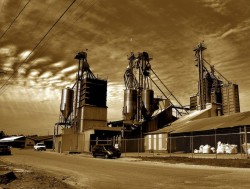
Corporations are laying people off which will increase their profits and decrease the general growth of the economy. At the end of the last article I posted by Russ Winter, several seem to argue that corporations should not be paying taxes, and that might help them increase profits and spend their money more productively. Keep in mind that American companies that are moving operations overseas and getting out of paying taxes, do business in the U.S. and get considerable benefits from this country.
Here's a portion of a list provided by JW n FL (thanks):
3) General Electric made $26 billion in profits in the United States over the past five years and, thanks to clever use of loopholes, paid no taxes...
4) Chevron received a $19 million refund from the IRS last year after it made $10 billion in profits in 2009. (Source: See 2009 Chevron annual report here. Note 15 on page FS-46 of this report shows a U.S. federal income tax liability of $128 million, but that it was able to defer $147 million for a U.S. federal income tax liability of negative $19 million.)
7) Goldman Sachs in 2008 only paid 1.1 percent of its income in taxes even though it earned a profit of $2.3 billion and received an almost $800 billion from the Federal Reserve and U.S. Treasury Department...
8) Citigroup last year made more than $4 billion in profits but paid no federal income taxes. It received a $2.5 trillion bailout from the Federal Reserve and U.S. Treasury...
9) ConocoPhillips, the fifth largest oil company in the United States, made $16 billion in profits from 2006 through 2009, but received $451 million in tax breaks through the oil and gas manufacturing deduction...
Here's a portion of a list provided by JW n FL (thanks):
3) General Electric made $26 billion in profits in the United States over the past five years and, thanks to clever use of loopholes, paid no taxes...
4) Chevron received a $19 million refund from the IRS last year after it made $10 billion in profits in 2009. (Source: See 2009 Chevron annual report here. Note 15 on page FS-46 of this report shows a U.S. federal income tax liability of $128 million, but that it was able to defer $147 million for a U.S. federal income tax liability of negative $19 million.)
7) Goldman Sachs in 2008 only paid 1.1 percent of its income in taxes even though it earned a profit of $2.3 billion and received an almost $800 billion from the Federal Reserve and U.S. Treasury Department...
8) Citigroup last year made more than $4 billion in profits but paid no federal income taxes. It received a $2.5 trillion bailout from the Federal Reserve and U.S. Treasury...
9) ConocoPhillips, the fifth largest oil company in the United States, made $16 billion in profits from 2006 through 2009, but received $451 million in tax breaks through the oil and gas manufacturing deduction...
Monday, November 1, 2010
"Revolution 1"
from the album The Beatles released on November 22, 1968
"Revolution" is a song by The Beatles written by John Lennon and credited to Lennon/McCartney. The Beatles released two distinct arrangements of the song in 1968: a hard rock version as the B-side of the single "Hey Jude", and a slower version titled "Revolution 1" on the eponymous album The Beatles (commonly called the "White Album"). Although "Revolution" was released first, it was recorded several weeks after "Revolution 1" as a re-make specifically designed to be released as a single. A third connected piece written by Lennon is the experimental "Revolution 9", which evolved from an unused portion of "Revolution 1", and also appears on the White Album.
"Revolution" was inspired by political protests in early 1968. Lennon's lyrics expressed doubt about some of the tactics. When the single version was released in August, the political left viewed it as betraying their cause. The release of the album version in November indicated Lennon's uncertainty about destructive change, with the phrase "count me out" modified to "count me out, in". In 1987, the song became the first Beatles recording to be licensed for a television commercial, which prompted a lawsuit from the surviving members of the group.[1]
"Revolution" was inspired by political protests in early 1968. Lennon's lyrics expressed doubt about some of the tactics. When the single version was released in August, the political left viewed it as betraying their cause. The release of the album version in November indicated Lennon's uncertainty about destructive change, with the phrase "count me out" modified to "count me out, in". In 1987, the song became the first Beatles recording to be licensed for a television commercial, which prompted a lawsuit from the surviving members of the group.[1]
The Beatles - Revolution (Live)
So, I have to ask... Where is the outrage over this?
I really am adding "What a Bernanke" to my vocabulary.
Subscribe to:
Posts (Atom)